
'This government is in the very bad habit of doing so again and again. It has done so many times.'

Senior Trinamool Congress leader Kalyan Banerjee has commented on the Supreme Court judgment regarding the Special Intensive Revision (SIR) of electoral rolls, emphasising its specific application to the Bihar case and highlighting the Election Commission's limited authority in determining citizenship.

'Notwithstanding the seriousness of the allegations made, every accused had a right to a speedy trial and the court had to take into account long periods of incarceration without trial as an additional consideration for grant of bail.'

The Supreme Court has dismissed a plea from a Dubai-based businessman seeking consolidation of 24 criminal cases against him, emphasising the need for a victim-centric judicial approach.
The Supreme Court of India has ruled that an appellate court convicting an accused for the first time in a criminal case must hear the accused on sentencing and cannot delegate the matter to a lower court.
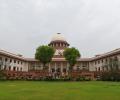
The Supreme Court, in a 6:3 majority verdict, has ruled that the expansive, labour-friendly definition of 'industry' from its 1978 Bangalore Water Supply and Sewerage Board judgement will not be used for interpreting the Industrial Relations Code of 2020. However, the 'triple test' from the 1978 verdict will still apply to pending cases under the now-repealed 1947 Industrial Disputes Act.

The Supreme Court has declined to stay the Meghalaya High Court's order granting bail to Sonam Raghuvanshi, accused of murdering her husband during their honeymoon. Despite the state's plea citing serious allegations, the apex court noted her release and compliance with bail conditions, scheduling further hearing post-reopening.
The Supreme Court, using its extraordinary powers under Article 142, has quashed the conviction of a man sentenced under the POCSO Act. This decision came after the victim, who was a minor at the time of the offence, married the accused upon reaching adulthood. The court emphasised that this ruling is based on the peculiar facts of the case and should not be considered a precedent.
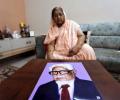
The Supreme Court has disposed of Teesta Setalvad's plea for passport release, advising her to reapply with a travel itinerary. The case relates to alleged fabrication of documents in the 2002 Gujarat riots.
The Supreme Court overturned a Madras High Court order, reinstating the conviction of nine individuals involved in the 2013 murder of Chennai-based neurologist Dr Subbiah, linked to a long-standing land dispute.
The Supreme Court has expressed serious concern over the Allahabad High Court's extraordinary 40-year delay in deciding a criminal appeal filed by a murder accused. The case involves Vijay Singh, who was convicted in 1985 and whose appeal was only dismissed in February this year, after four decades. The top court questioned measures to address mounting pendency and rejected a suggestion to dismiss old cases solely due to delay.

The Supreme Court has agreed to examine Sebi's challenge to a Securities Appellate Tribunal (SAT) decision that cleared Wadia Group Chairman Nusli Wadia, Bombay Dyeing, and others of allegations of fraudulent financial reporting.

The Supreme Court has declared the right to walk on demarcated footpaths a fundamental right, prioritising it over motorised vehicle movement, and has called for the establishment of a regulatory body to ensure its enforcement and provide restitutionary remedies for violations.
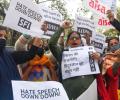
The Supreme Court of India has stated that the current legal framework is sufficient to address hate speech, declining to intervene and create new offences.
The Supreme Court has acquitted accused persons in a murder case, highlighting the dangers of inept or scripted investigations in criminal prosecutions.

The Enforcement Directorate (ED) is set to appeal the Delhi High Court's decision to quash a money laundering case against news portal NewsClick and its editor-in-chief Prabir Purkayastha, arguing that the High Court 'overlooked or left unaddressed' critical contentions regarding alleged FDI rule violations and false representations to authorities.
The Supreme Court has called for strict enforcement of the Pre-Conception and Pre-Natal Diagnostic Techniques (PCPNDT) Act to counter the deep-seated patriarchal preference for male children and prevalent sex-selection practices. The court highlighted declining child sex ratios and the continued need for efforts despite government welfare schemes, stressing that true equality is yet to be achieved. The observations were made while dismissing a doctor's appeal in a PCPNDT Act violation case.

Tata Consultancy Services (TCS) will make an additional provision of USD 70 million in Q1 FY2027, bringing its total provision to USD 220 million, after the US Supreme Court declined to review a lower court ruling in a trade secrets dispute with Computer Sciences Corporation (now DXC Technology).
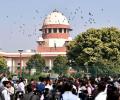
'A rigid or overly broad interpretation could lead to a chilling effect on investments and growth in sectors traditionally driven by private initiative.' 'Entrepreneurs may fear that their assets could be arbitrarily appropriated by the State under the guise of serving the 'common good' without sufficient legal safeguards.' 'The judgment thus supports a more nuanced view, one that balances individual property rights with public welfare objectives.'

Retiring Supreme Court Justice Sanjay Karol stated in his farewell address that judges are not gods and will not get every judgement right, emphasising the need for humility and the ability to see the real person behind every litigant.

A Delhi court has dismissed the bail applications of activists Umar Khalid and Sharjeel Imam in the 2020 Delhi riots conspiracy case, citing its obligation to follow a previous Supreme Court order that rejected their bail.

The Supreme Court has scheduled a July hearing for the Rs 500 crore money decree case involving Ras Al Khaimah Investment Authority (RAKIA) and industrialist Nimmagadda Prasad, following the failure of a mediation process led by former Chief Justice of India U U Lalit.

The Supreme Court has ruled that borrowers are not entitled to a personal hearing before banks classify their loan accounts as "fraud" under RBI directions, clarifying that a written response to a show-cause notice and access to the forensic audit report (with redactions) are sufficient for natural justice.

'My argument was straightforward: If the Constitution allows this reservation and SC/ST and OBC candidates are already getting reservation in private institutions -- backed by Constitution Bench orders -- then not extending the same to EWS candidates directly violates the 103rd Amendment and Article 14, which guarantees the right to equality.'

The Supreme Court has said that selling land or property is not a service under the Finance Act, 1994, so such sales cannot be charged with service tax.

A US appeals court has upheld a $562.5 million arbitral award, which has grown to over $2 billion with interest, in favour of Devas Multimedia against Antrix Corporation, the commercial arm of ISRO, ruling that US courts have jurisdiction despite Antrix being government-owned.

Former Tehelka editor Tarun Tejpal has been convicted by the Bombay High Court's Goa bench in a 2013 rape case and sentenced to 10 years' rigorous imprisonment, overturning his 2021 acquittal. Tejpal claims he is a "political victim" and will challenge the verdict in the Supreme Court, alleging his journalistic career has been targeted.

The Supreme Court has stayed a Madras High Court order that had quashed the Tamil Nadu government's decision to provide government jobs to relatives of those who died in a stampede at Karur last year, questioning the locus standi of petitioners challenging government policy.

The Bombay High Court has convicted former Tehelka editor Tarun Tejpal for the sexual assault of a junior colleague in 2013, overturning his 2021 acquittal by a trial court.

The Supreme Court of India has issued a strong warning against the use of "non-existent, fake, and hallucinated" judgements generated by artificial intelligence (AI), likening it to "the release of methyl Isocyanate in the province of law and justice: invisible, insidious, and catastrophic." The court set aside an NCLT verdict that relied on such AI-generated precedents.

The Supreme Court has agreed to hear a plea from the Muslim side regarding the non-compliance of its directions to provide an alternative site near the disputed Bhojshala complex in Dhar, Madhya Pradesh, for Friday prayers. The Muslim side alleges the proposed site is unsuitable and too far, while the Solicitor General claims another location has been identified.
The Tamil Nadu government has appealed to the Supreme Court against a Madras High Court judgment. The High Court ruled that individuals converting to Islam cannot claim reservation under the Backward Class (Muslim) category solely based on conversion, striking down a state Government Order that allowed such benefits.
The Allahabad High Court's Lucknow bench ordered the immediate release of a minor, criticising the police and a judicial magistrate for illegally detaining him without verifying his age and failing to follow Supreme Court guidelines on juvenile justice. The court has sought affidavits from the officials involved.

We must heed what the CJI has said. Challenging every judgment of the central government is inviting chaos, asserts Shreekant Sambrani.
The Supreme Court has ruled that courts must first decide on allegations of adultery made by a husband before granting interim maintenance to the wife, stating that if adultery is proven, the wife is not entitled to maintenance.
The draft regulations for use of AI in courts 'shall apply to the use, deployment, or integration of AI in any judicial, adjudicatory or administrative function of the Supreme Court of India, high courts, and all courts including the Tribunals and statutory Commissions performing adjudicatory functions, within the territory of India'.

The Vishva Hindu Parishad (VHP) has strongly criticised the Faizabad Bar Association's resolution to prevent advocates from representing those accused in the alleged theft of donations from the Ram Janmabhoomi temple, calling the move 'unethical and unlawful' and a violation of constitutional principles and professional ethics.

The Supreme Court of India will commence hearings on two significant constitutional matters: the interpretation of legislative privileges of MLAs concerning freedom of speech and expression, and the power of state legislatures to impose additional sales tax levies. Both issues will be heard by seven-judge Constitution benches, with one case stemming from a 2003 plea by journalist N Ravi regarding breach of privilege.

The Supreme Court has reserved its decision on a plea by the Tamil Nadu government challenging a Madras High Court verdict. The High Court had ruled that individuals converting to Islam are not automatically entitled to reservation benefits under the Backward Class (Muslim) category solely based on their conversion.

Maoist leader Azad alias Dana Keshab Rao has been released after spending over 15 years in jail as an undertrial prisoner, following his acquittal in all 49 cases registered against him in Odisha and Andhra Pradesh.
